


Super User
European Code of Conduct for Mediators
EUROPEAN CODE OF CONDUCT FOR MEDIATORS
European Code of Conduct for Mediators
The European Code of Conduct for Mediators was developed by an initiative group of practicing mediators with the support of the European Commission and adopted at a conference in Brussels on June 2, 2004.
This code of conduct defines a number of principles that mediators undertake to adhere to at their own risk voluntarily. The Code is designed for all types of mediation in civil and commercial matters.
Organizations providing mediation services can also take on these obligations, requiring mediators operating under the auspices of these organizations to comply with the code. Organizations are able to provide information on the measures they take to ensure that mediators comply with the code through, for example, training, evaluation and monitoring.
For the purposes of this code, mediation is defined as any process in which two or more parties agree to engage a third party (hereinafter “the mediator") to assist them in resolving their dispute by reaching agreement without a court decision, regardless of how this process may be called or characterized in the generally accepted sense in each of the member countries.
References to the code do not affect the operation of national legislation or the rules governing individual areas of activity.
Organizations providing mediation services can develop more detailed codes that apply to a specific context or to the types of mediation services they offer, as well as to specific areas, such as mediation in family affairs or in consumption.
- COMPETENCE AND APPOINTMENT OF THE MEDIATOR
1.1. Mediator Competency
Mediators should be competent and have the necessary knowledge in the field of mediation. Important factors are the proper training and continuous improvement of their theoretical and practical skills in the field of mediation, taking into account all relevant standards or requirements related to their accreditation.
1.2. The purpose of the mediator
The mediator discusses with the parties acceptable dates for the mediation. Before accepting an offer to act as a mediator, a mediator must make sure that he has sufficient work experience and competence to conduct mediation, and, at the request of the parties, provide them with information about his previous activities and about his work experience.
1.3. Advertising by mediators of their services
Mediators have the right to advertise their activities in a professional, truthful and dignified manner.
- INDEPENDENCE AND IMPARTIALITY
2.1. Independence and neutrality
The mediator has no right to act or, if he began to act, continue to act without first clarifying all the circumstances that could or could affect his independence or cause a conflict of interest. The obligation to clarify such circumstances is a constant requirement throughout the process of mediation. These circumstances include:
- any personal or business relationship with one of the parties,
- any, whether direct or indirect, financial or other interest in the results of mediation,
- the previous activity of a mediator or any of his company, an enterprise in any other capacity than a mediator, in favor of one of the parties.
In such cases, the mediator can agree to mediation or continue mediation only if he is confident in his ability to mediate in full independence and neutrality, ensuring complete objectivity and with a certain agreement between the parties.
2.2. Impartiality
The mediator should always act absolutely objectively in relation to each of the parties and strive to be perceived as acting and striving to provide services to each of the parties with regard to mediation in the same way, with respect to the mediation process.
- MEDIA AGREEMENT, PROCESS, DISPUTE SETTLEMENT AND REMUNERATION
3.1. Procedure
The mediator must make sure that the parties understand the features of the mediation process and the role of the mediator and the parties in this process.
In particular, the mediator must make sure that the parties understand the terms and conditions of the mediation agreement, including, in particular, all the provisions regarding the mediator's and the parties' obligations regarding confidentiality, and express their consent to accepting mediation obligations. these terms and conditions.
At the request of the parties, a mediation agreement is concluded in writing.
The mediator must conduct the procedure properly, taking into account the circumstances of the case, including a possible imbalance of forces and the rule of law, possible wishes of the parties and the need for a quick settlement of the dispute. The parties are completely free to express their consent with the mediator - with reference to the rules or otherwise with those methods that should be used in mediation.
The mediator, if he considers it appropriate, may hear the parties individually.
3.2. Process integrity
The mediator, if he considers it appropriate, may, having informed the parties, terminate the mediation procedure if:
- he, taking into account the circumstances of the case and his competence, considers that the proposed agreement is impossible or illegal,
- He believes that the continuation of the mediation procedure is unlikely to lead to a positive result.
3.3. Process end
The mediator should take all appropriate measures to ensure that mutual understanding is reached by all parties on the basis of informed information and consent, and that all parties understand the terms of the agreement.
The parties have the right to refuse to continue the mediation process at any time without explanation.
The mediator, at the request of the parties and within the limits of his competence, may inform the parties about how they can draw up an agreement and about the possibilities to ensure the execution of the agreement.
3.4. Remuneration
In cases where this has not been done in advance, the mediator must in each case provide the parties with complete information about the way he is remunerated, which he means. The mediator should not agree to mediation until the consent of all interested parties to the appropriate remuneration has been obtained.
- PRIVACY
The mediator must keep confidential all information received during the mediation process or related to it, including the fact that mediation will be carried out or has already taken place, except if it is connected with the requirements of the law or the principles of public policy. Any information communicated confidentially to the mediator of one of the parties should not be communicated by him to the other party, unless it is agreed by the other party or required by law.
Mediation Law
About mediation
The Law of the Republic of Kazakhstan dated January 28, 2011 No. 401- IV
This Law regulates public relations in the field of mediation organization in the Republic of Kazakhstan, defines its principles and procedure, as well as the status of mediator.
Chapter 1. GENERAL PROVISIONS
Article 1. The scope of mediation
- The scope of mediation is disputes (conflicts) arising from civil, labor, family and other legal relations with the participation of individuals and (or) legal entities, as well as those considered during criminal proceedings in cases of crimes of light and medium gravity, criminal offenses unless otherwise established by the laws of the Republic of Kazakhstan, and relations arising from the execution of enforcement proceedings.
- The mediation procedure does not apply to disputes (conflicts) arising from the relations referred to in paragraph 1 of this article, if such disputes (conflicts) affect or may affect the interests of third parties not participating in the mediation procedure and persons recognized court incompetent or partially capable.
- The mediation procedure does not apply to disputes (conflicts) arising from civil, labor, family and other legal relations involving individuals and (or) legal entities when one of the parties is a state body. 4. The mediation procedure is not applied in criminal cases of corruption offenses and other crimes against the interests of public service and public administration.
Article 2. Basic concepts used in this Law
The following basic concepts are used in this Law: 1) an agreement on the settlement of a dispute (conflict) - a written agreement of the parties reached by them as a result of mediation; 2) a mediator - an independent individual involved by the parties to conduct mediation on a professional and unprofessional basis in accordance with the requirements of this Law; 3) association (union) of mediators - an organization created in order to coordinate the activities of organizations of mediators, as well as to protect their rights and legitimate interests; 4) mediator organizations - non-profit organizations created to unite mediators on a voluntary basis to achieve their common goals for the development of mediation, not contradicting the legislation of the Republic of Kazakhstan; 5) mediation - a procedure for the settlement of a dispute (conflict) between the parties with the assistance of a mediator (mediators) in order to achieve a mutually acceptable solution, implemented by voluntary consent of the parties; 6) parties to mediation - subjects of relations specified in clause 1 of Article 1 of this Law participating in the mediation procedure; 7) mediation agreement - a written agreement of the parties concluded with a mediator in order to resolve a dispute (conflict) prior to mediation; 8) mediation participants - the mediator and the sides of mediation.
Article 3. Objectives of mediation
The objectives of mediation are: 1) to achieve the option of resolving a dispute (conflict) that suits both sides of mediation;
2) a decrease in the level of conflict between the parties.
Article 4. Principles of conducting mediation
Mediation is based on the principles of: 1) voluntariness;
2) the equal rights of the parties to mediation;
3) the independence and impartiality of the mediator;
4) inadmissibility of interference in the mediation procedure;
5) confidentiality.
Article 5. Volunteer
- The condition for participation in the mediation procedure is the mutual voluntary will of the parties expressed in the mediation agreement.
- The parties to mediation have the right to refuse mediation at any stage.
- During mediation, the parties have the right, at their discretion, to dispose of their material and procedural rights, increase or decrease the amount of claims, or refuse a dispute (conflict).
- The parties are free to choose questions for discussing options for a mutually acceptable agreement both provided for by law and not provided for by law, which does not violate the rights and interests protected by law of parties and third parties.
Article 6. Equality of parties to mediation
The parties to mediation enjoy equal rights when choosing a mediator, the mediation procedure, their position in it, the ways and means of upholding it, when receiving information, in assessing the acceptability of the terms of an agreement on conflict resolution and bear equal responsibilities.
Article 7. Independence and impartiality of the mediator. Inadmissibility of mediation intervention
- When conducting mediation, the mediator is independent of the parties, government bodies, other legal, official and physical persons. The mediator is independent in the choice of means and methods of mediation, the admissibility of which is determined by this Law.
- The mediator should be impartial, conduct mediation in the interests of both parties and ensure that the parties participate equally in the mediation process. In the presence of circumstances that impede the impartiality of the mediator, he must refuse to conduct mediation.
- Intervention in the activities of the mediator during mediation by the persons referred to in paragraph 1 of this article is not allowed, except in cases provided for by the laws of the Republic of Kazakhstan.
Section 8. Confidentiality
- Mediation participants are not entitled to disclose information that became known to them during mediation, without the written permission of the mediation party that provided this information.
- The mediator may not be questioned as a witness about the information that became known to him during the mediation, with the exception of cases provided for by the laws of the Republic of Kazakhstan.
- The disclosure by the mediation participant of information that became known to him during the mediation, without the permission of the mediation party that provided this information, entails liability established by the laws of the Republic of Kazakhstan.
Chapter 2. LEGAL PROVISION OF MEDIATORS AND ORGANIZATIONS PROVIDING MEDIA
Article 9. Requirements for mediators
- A mediator may be an independent, impartial, not interested in the outcome of the case individual selected by mutual agreement of the parties to mediation, included in the register of mediators and who has consented to the function of mediator.
- The activity of a mediator can be carried out both on a professional basis (professional mediator), and on an unprofessional basis. 3. The mediator may carry out activities on an unprofessional basis: 1) persons who have reached the age of forty and are on the register of non-professional mediators; 2) judges during the conciliation proceedings in court in accordance with the Civil Procedure Code of the Republic of Kazakhstan. 4. The mediator may carry out activities on a professional basis: 1) persons with higher education who have reached the age of twenty-five, having a document (certificate) confirming that they have completed the training program for mediators, approved in the manner determined by the Government of the Republic of Kazakhstan, and included in the register of professional mediators; 2) retired judges. 5. The activity of a mediator is not an entrepreneurial activity. 6. Persons carrying out the activities of a mediator shall also have the right to carry out any other activity not prohibited by the legislation of the Republic of Kazakhstan. 7. A mediator cannot be a person: 1) authorized to perform state functions and equated with it; 2) recognized by the court as legally incompetent or partially legally incapable; 3) in relation to which criminal prosecution is carried out; 4) having a conviction not canceled or not withdrawn in the manner prescribed by law. 8. By agreement of the parties to mediation, additional requirements for a mediator may be established.
Article 10. Rights and obligations of a mediator
- The mediator has the right to: 1) during the mediation, hold meetings with all parties simultaneously and with each of the parties separately and provide them with oral and written recommendations for resolving a dispute (conflict); 2) to inform the public about the implementation of their activities in compliance with the principle of confidentiality. 2. The mediator is obliged: 1) to conduct mediation only with the consent of the parties to mediation; 2) before the mediation begins, explain to the mediation parties its goals, as well as their rights and obligations. 3. A professional mediator is required to comply with the Code of Professional Ethics of Mediators, approved by the association (union) of mediators, as well as submit a monthly report on the work done according to the requirements established by the organization of mediators. 4. The mediator also has other rights and carries other obligations stipulated by the legislation of the Republic of Kazakhstan.
Article 11. Rights and obligations of the parties to mediation
- Parties to mediation have the right: 1) to voluntarily choose a mediator (mediators); 2) refuse the mediator; 3) to refuse to participate in it at any moment of mediation; 4) participate in mediation in person or through representatives whose powers are based on a power of attorney drawn up in the manner prescribed by law; 5) if the agreement on the settlement of the dispute (conflict) is not fulfilled or improperly executed, apply to the court or the body conducting the criminal process in which the case is being investigated in connection with which mediation was carried out in the manner established by the legislation of the Republic of Kazakhstan. 2. The parties to mediation are obliged to execute the agreement on the settlement of the dispute (conflict) in the manner and within the time periods provided for by this agreement. 3. The parties to mediation also have other rights and bear other obligations stipulated by the legislation of the Republic of Kazakhstan.
Section 12. Challenge of the Plectrum
- The parties to mediation by mutual agreement have the right to choose another mediator. When conducting mediation in civil or criminal proceedings, the parties are required to notify the court or the criminal prosecution body. 2. In the event of circumstances preventing the mediator from performing his functions in accordance with the principles of mediation, the mediator must immediately withdraw. 3. The mediator has the right to refuse to conduct mediation if, in his opinion, further efforts in the process of conducting it will not lead to the resolution of the dispute (conflict) between the parties, or to terminate mediation with the consent of the parties, fixed in writing.
Article 13. Mediator organizations
- Organizations of mediators are non-profit, non-governmental, self-financing and self-governing organizations created at the initiative of mediators in the legal forms provided for by the Law of the Republic of Kazakhstan "On Non-Profit Organizations". 2. The organization of mediators is created in order to ensure material, organizational, legal and other conditions for mediators to provide mediation services. 3. Mediator organizations have the right to conduct professional training and advanced training of mediators with the issuance of a document (certificate) about the passage of appropriate training in mediation. 4. In order to coordinate their activities, develop and unify the standards (rules) of professional activity of mediators, the procedure (regulation) for mediation, the procedure for payment by the parties of mediation of remuneration to mediators, the organization of mediators is entitled to unite in an association (union). 5. Joining a mediators' organization or an association (union) of mediators is carried out on a voluntary basis. In this case, the collection of entrance fees by the organization of mediators or the association (union) of mediators is not allowed. 6. The association (union) of mediators is entitled to develop and approve a Code of Professional Ethics for Mediators.
Article 14. Organization of mediators by the registry of professional mediators
- Each organization of mediators maintains its own register of professional mediators engaged in mediation on the territory of the Republic of Kazakhstan. 2. For inclusion in the register of professional mediators, mediators must provide a copy of an identification card to the organization of mediators (a notarized copy if the original identification card is not submitted for verification), medical certificates from medical organizations providing narcological assistance, and a neuropsychiatric organization issued at the applicant’s place of residence , a certificate of no criminal record, a copy of a higher education diploma and a document (certificate) confirming the passage special training of mediation. 3. The register of professional mediators contains: 1) the surname, name and patronymic (if any) of the mediator; 2) the legal address of the mediator; 3) mediator contact information (mailing address or email address or telephone or fax number); 4) information about the area of mediation in which the mediator specializes; 5) information about the language in which the mediator is able to mediate; 6) information on the availability of a document (certificate) confirming the passage of training in the training program for mediators; 7) information on the suspension of the mediator. 4. Mediators shall be included in the register of professional mediators by the organization of mediators within ten days from the date of receipt of the relevant application, subject to the requirements of paragraph 3 of this article and article 9 of this Law. If the mediator is not included in the register of professional mediators, the organization of mediators must, within ten days from the date of receipt of the relevant application, give a reasoned answer in writing about the reasons for the refusal. 5. Mediators are excluded from the register of professional mediators after a calendar year, unless a statement by the mediator has been submitted by December 25 of the relevant year to extend the period of stay in the registry for the next calendar year. An application to extend the period of stay in the registry may be submitted in electronic form to the electronic address of the mediators' organization. 6. The register of professional mediators should be posted on the Internet resource of the organization of mediators in Kazakh and Russian languages and updated as mediators are included in it. Mediator organizations are entitled to publish the register of professional mediators in periodicals. 7. In case of violation by the mediator of the requirements of this Law, the parties involved in the mediation procedure are entitled to apply to the organization of mediators with a corresponding statement. Upon confirmation of the violation, the organization of mediators suspends the activity of the mediator, indicating this in the register of professional mediators for a period of six months. 8. The decision of the organization of mediators to refuse inclusion, exclusion from the list of professional mediators, to suspend the activities of a mediator may be appealed to a court.
Article 15. Mediation by members of the local community
- Along with mediators operating on an unprofessional basis, mediation may be carried out by members of the local community who are elected by the meeting (gathering) of the local community and have extensive life experience, authority and an impeccable reputation. 2. The protocol of the meeting (gathering) of the local community on the election of members of the local community as non-professional mediators shall be sent to the authorized body within ten working days for inclusion in the register of non-professional mediators with the application of the documents provided for in paragraph 2 of Article 16, as well as information in accordance with paragraph 3 Section 16 of this Law.
Article 16. Maintenance by the akim of a district (city of regional significance), district in a city, city of regional significance, towns, villages, rural districts of the register of non-professional mediators
- The register of non-professional mediators who mediate on the territory of the Republic of Kazakhstan on an unprofessional basis is maintained by the akim of the district (city of regional significance), district in the city, city of regional significance, village, village, rural district (hereinafter - the authorized body). 2. Mediators performing mediation on an unprofessional basis must contact the authorized body for inclusion in the register of non-professional mediators with copies of identification cards (a notarized copy if the original identification card is not submitted for verification), medical certificates from a medical organization providing drug treatment, and a neuropsychiatric organization issued at the place of residence of the applicant, a certificate of criminal record. 3. The register of non-professional mediators contains: 1) the surname, name and patronymic (if any) of the mediator; 2) the legal address of the mediator; 3) mediator contact information (mailing address or email address or telephone or fax number); 4) information about the area of mediation in which the mediator specializes; 5) information about the language in which the mediator is able to mediate; 6) information on the suspension of the mediator. 4. Mediators are included by the authorized body in the register of non-professional mediators in a notification manner within ten days from the date of receipt of the relevant application, subject to the requirements of paragraph 2 of this article and article 9 of this Law. If the mediator is not included in the register of unprofessional mediators, the authorized body must give a reasoned response in writing about the reasons for the refusal within ten days from the date of receipt of the corresponding application. 5. Mediators are excluded from the register of unprofessional mediators after a calendar year, unless a statement by mediators has been submitted before December 25 of the relevant year to extend the period of stay in the registry for the next calendar year. An application for extending the period of stay in the register may be submitted in electronic form to the electronic address of the authorized body. 6. The register of non-professional mediators should be posted on the Internet resource of the authorized body in Kazakh and Russian or in places accessible to the public and updated as mediators are included in it. The authorized body has the right to publish the register of non-professional mediators in periodicals.
Chapter 3. CONDUCTING MEDIA
Article 17. Procedure for conducting mediation
- Mediation is carried out in accordance with the procedure agreed upon by the parties that does not contradict the requirements of this Law. 2. With the consent of the parties, the procedure (regulation) of mediation approved by the organizations of mediators may be applied.
Article 18. Place and time of mediation
- Parties may, at their discretion, agree on a venue for mediation. 2. With the consent of the parties, the mediator determines the date and time of the mediation.
Article 19. Language for conducting mediation
The parties may, at their discretion, agree on the language or languages to be used during the mediation process.
Article 20. Terms of mediation
- Mediation is carried out by mutual agreement of the parties and upon conclusion of a mediation agreement between them. 2. Mediation in the settlement of disputes arising from civil, labor, family and other legal relations involving individuals and (or) legal entities can be applied both before going to court, and after the start of the trial. 3. Judges and officials of bodies conducting criminal prosecution are not entitled in any form to force the parties to mediate. 4. A proposal to a party to resort to mediation can be made at the request of the other party, by a court or criminal prosecution body. 5. Mediation starts from the day the mediation parties conclude a mediation agreement. 6. If one of the parties sends a written proposal to appeal to mediation and within ten calendar days from the date of its sending or within the other reasonable time specified in the proposal, has not received the consent of the other party to use mediation, such proposal shall be considered rejected. 7. For mediation, the parties, by mutual agreement, choose one or more mediators. 8. The organization of mediators may recommend the candidacy of a mediator (mediators) if the parties have sent a corresponding appeal to the indicated organization. 9. The timing of mediation is determined by the mediation agreement taking into account the requirements of paragraph 1 of Article 23 and paragraph 4 of Article 24 of this Law. If mediation is carried out outside the framework of a civil or criminal process, the mediator and the parties must take all possible measures to ensure that this procedure is terminated within a period of not more than thirty calendar days. In exceptional cases, due to the complexity of the resolved dispute (conflict), and the need to obtain additional information or documents, the period for mediation may be increased by agreement of the parties to the mediation and with the consent of the mediator, but not more than thirty calendar days.
Article 21. Form and content of a mediation agreement
- In the event of mutual agreement of the parties on the resolution of a dispute (conflict) by mediation, a mediation agreement shall be drawn up in writing. 2. The essential conditions of a mediation agreement are: 1) the date, time and place of drawing up the mediation agreement; 2) the name of the parties to the dispute (conflict), surnames and initials, the positions of their representatives, indicating the authority; 3) subject of dispute (conflict); 4) information about the mediator (mediators), which (which) is selected (selected) by the parties to mediation; 5) the conditions, procedure and amount of expenses associated with the mediation, and in the case of mediation on a professional basis - the payment of remuneration to the mediator (mediators) for mediation; 6) the language of the mediation; 7) the obligation of the parties on the confidentiality of mediation and the consequences of failure to fulfill such an obligation; 8) the grounds and extent of liability of the mediator participating in the settlement of the dispute (conflict) of the parties to mediation, for actions (inaction), resulting in losses (damage) for the parties to mediation; 9) details of the parties (identification data, place of residence, contact numbers); 10) the duration of the mediation; 11) the procedure for mediation. 3. By agreement of the parties, additional requirements for mediators may be established. 4. The parties may agree that the conditions, procedure and amount of payment by the parties of mediation of remuneration to the mediator for the mediation are established in the manner (regulation) approved by the organizations of mediators.
Article 22. Expenses related to mediation
- The costs associated with conducting mediation include: 1) remuneration of the mediator; 2) the costs incurred by the mediator in connection with the mediation, including the cost of travel to the place of the dispute, accommodation and meals. 2. Professional mediators mediate both on a paid and on a free basis. 3. The amount of remuneration of a professional mediator (mediators) shall be determined by agreement of the parties with a mediator (mediators) before the start of mediation. 4. Unless otherwise established by agreement of the parties, the costs associated with the mediation are paid by the parties jointly in equal shares. 5. If the mediator refuses to conduct mediation due to circumstances that impede his impartiality, he is obliged to return the sums paid to him by the parties. 6. Non-professional mediators shall be reimbursed for the expenses incurred by them in connection with the mediation specified in subparagraph 2) of paragraph 1 of this article.
Article 23. Features of mediation in the field of civil, labor, family and other legal relations with the participation of individuals and (or) legal entities
- Mediation in the settlement of disputes arising from civil, labor, family and other legal relations involving individuals and (or) legal entities must be completed no later than thirty calendar days from the date of conclusion of the mediation agreement. If necessary, by mutual decision of the parties, the period of mediation may be extended to thirty calendar days, but not more than sixty calendar days in total. 2. Mediation in the settlement of disputes arising from civil, labor, family and other legal relations involving individuals and (or) legal entities under consideration by the court must be completed no later than thirty calendar days from the date of conclusion of the mediation agreement. If necessary, the period for mediation may be extended by the parties up to thirty calendar days, but not more than sixty calendar days, together with the subsequent sending of a joint written notice to the court. 3. The mediation agreement for the settlement of disputes arising from civil, labor, family and other legal relations with the participation of individuals and (or) legal entities under consideration by the court is the basis for the suspension of the proceedings. 4. Upon termination of mediation conducted within the framework of the civil process, the parties are obligated to immediately send to the court in which the civil case is proceeding: 1) in the case of signing an agreement on the settlement of the dispute, the specified agreement; 2) in other cases - a written notice on the termination of mediation indicating the grounds provided for in Section 26 of this Law.
Article 24. Features of mediation conducted during criminal proceedings
- The conclusion of a mediation contract by the parties does not suspend the criminal proceedings. 2. The fact of participation in mediation cannot serve as evidence of a guilty plea by a participant in legal proceedings that is a party to mediation. 3. If during mediation one of the parties is a minor, the participation of a teacher or psychologist or legal representatives of the minor is mandatory. 4. Mediation in the course of criminal proceedings should be carried out within the time limits established by the criminal procedure law for pre-trial and trial proceedings. 5. Refusal to sign an agreement on the settlement of the conflict cannot worsen the position of a party to the proceedings, which is a party to mediation. 6. Upon termination of mediation conducted within the framework of the criminal process, the parties are obliged to immediately send to the body conducting the criminal process the criminal case is being processed: 1) in the case of signing an agreement on the settlement of the conflict - this agreement; 2) in other cases - a written notice on the termination of mediation indicating the grounds provided for in Section 26 of this Law.
Article 25. Features of mediation in the field of family relations
- Through mediation, disagreements between spouses regarding the continuation of marriage, the exercise of parental rights, the establishment of the place of residence of children, the contribution of parents to the maintenance of children, as well as any other disagreements arising in family relations, can be resolved. 2. When conducting mediation, the mediator must take into account the legitimate interests of the child. 3. If, during mediation, facts are established that jeopardize or could jeopardize the normal growth and development of the child or cause serious harm to his legitimate interests, the mediator must contact the authority exercising the powers to protect the rights of the child.
Section 26. Termination of Mediation
Mediation is terminated in the following cases: 1) the parties sign an agreement on the settlement of a dispute (conflict) - from the date of signing such an agreement; 2) the establishment by the mediator of circumstances precluding the possibility of resolving a dispute (conflict) by mediation; 3) a written refusal of the parties from mediation in connection with the impossibility of resolving a dispute (conflict) through mediation - from the day the parties signed the written refusal; 4) a written refusal by one of the parties to continue mediation - from the day the mediator sends a written refusal; 5) the expiration of the mediation period - from the day it expires, taking into account the provisions of Articles 23 and 24 of this Law.
Article 27. Agreement on the settlement of a dispute (conflict)
- An agreement on the settlement of a dispute (conflict) reached by the parties of mediation during the mediation is concluded in writing and signed by the parties. 2. The agreement must contain information on the parties to the mediation, the subject of the dispute (conflict), the mediator (mediators), as well as the terms of the agreement agreed by the parties, the methods and terms of their execution and the consequences of their failure to perform or improper performance. 3. An agreement on the settlement of a dispute (conflict) is subject to execution by the parties of mediation voluntarily in the manner and terms provided for by this agreement. 4. An agreement on the settlement of a dispute concluded before a civil case in court is a transaction aimed at establishing, amending or terminating the civil rights and obligations of the parties. In the event of failure to fulfill or improper performance of such an agreement, the mediation party that violated the agreement shall be liable in the manner prescribed by the laws of the Republic of Kazakhstan. 5. The agreement on the settlement of the dispute, reached by the parties during the mediation in the course of the civil process, shall immediately be forwarded to the judge who is in charge of the civil case. The dispute settlement agreement is approved by the court in the manner prescribed by the Civil Procedure Code of the Republic of Kazakhstan. In this case, the paid state duty shall be returned to the payer in the manner prescribed by the Code of the Republic of Kazakhstan "On taxes and other obligatory payments to the budget" (Tax Code). 6. The agreement on the settlement of the conflict reached by the parties during the mediation during the criminal process is an agreement on the settlement of the conflict by redressing the harm caused to the victim and reconciling the person who committed the criminal offense with the victim. 7. The specified agreement shall be immediately forwarded to the body conducting the criminal process in the process of which the criminal case is being investigated, and in the cases provided for by the Code of Criminal Procedure of the Republic of Kazakhstan, it is a circumstance that excludes or allows not to prosecute. 8. The agreement on the settlement of the conflict shall enter into force on the day of its signing by the parties. 9. In case of evasion of the execution of the agreement, the interested party is entitled to apply to the court with a statement on the fulfillment of the obligation under the agreement in a simplified written procedure.
Chapter 4. FINAL PROVISIONS
Section 28. Procedure for the entry into force of this Law
This Law shall enter into force six months after its first official publication.
Directive of the European Parliament
Directive of the European Parliament and of the Council of May 21, 2008 No. 2008/52
EUROPEAN PARLIAMENT AND THE COUNCIL OF THE EUROPEAN UNION,
Based on the Treaty establishing the European Community, in particular on Art. 61 (c) and the second section of Art. 67 (5) of the said Agreement,
Based on the proposal of the Commission,
Based on the views of the European Committee on Economic and Social Affairs1,
Acting in accordance with the procedure defined in Art. 251 Treaties 2,
Considering the following circumstances:
(1) The community seeks to maintain and develop the legal space of freedom, security and justice, in which the free movement of citizens is guaranteed. In this regard, the Community should, in particular, take measures in the field of judicial cooperation in civil matters necessary to ensure the proper functioning of the domestic market.
(2) The principle of accessibility of justice is one of the fundamental principles, in connection with which the Council of Europe, at its meeting in Tampere on October 15 and 16, 1999, called on the EU member states to create alternative, non-judicial procedures to ensure better access to justice in Europe.
(3) In May 2000, the Council approved the findings regarding alternative dispute resolution methods in accordance with civil and commercial law, stating that the adoption of basic principles in this area is an important step towards ensuring the proper development and functioning of non-judicial dispute resolution procedures for civil and commercial matters and thus simplifying and improving access to justice.
(4) The European Commission presented in 2002 " Green Paper » (Green Paper), summarizing the current situation with regard to alternative methods of dispute resolution in Europe and initiated a wide-ranging consultations with Member States and interested parties on possible measures to promote the use of mediation .
(5) The goal of ensuring better access to justice as part of the European Union’s policy aimed at creating a legal space for freedom, security and justice should include access to both judicial and non-judicial methods of dispute resolution. The directive is intended to contribute to the proper functioning of the domestic market, in particular with regard to the provision and use of mediation services.
(6) Mediation can provide cost-effective and quick out-of-court settlement of disputes in civil and commercial matters through procedures that meet the needs of the parties. With regard to the agreements reached through mediation, there is a high probability that they will be executed voluntarily, as well as a high probability that they will ensure the maintenance of friendly and stable relations between the parties. These advantages are most clearly confirmed in situations involving international elements.
(7) In this regard, in order to develop further use of mediation and provide parties resorting to mediation with the opportunity to rely on a predictable legal framework, it is necessary to have framework legislation that defines, in particular, the main aspects of civil procedures.
(8) The provisions of this Directive should deal exclusively with mediation in disputes of an international nature, but there are no obstacles to the use by Member States of such provisions in relation to mediation at the national level.
(9) This Directive should in no way impede the use of modern communication technologies in the mediation process.
(10) This Directive should concern procedures in which two or more parties to a dispute at the international level try independently, on the basis of voluntariness, the Directive should apply to civil and commercial matters. However, this Directive should not apply to rights and obligations for which the parties are not entitled to make independent decisions, taking into account current legislation. Such rights and obligations often occur under family law and labor law.
(11) This Directive does not apply to pre-contract negotiations or to judicial or arbitral proceedings, such as certain judicial reconciliation schemes, consumer complaint schemes, arbitration or expert opinions, as well as procedures carried out by institutions issuing formal recommendations, whether whether legally binding or not, to resolve disputes.
(12) This Directive should apply to situations in which the court directs the parties to mediation or in which national law requires mediation. In addition, in cases where a judge, in accordance with national law, can act as a mediator, this Directive should also apply to mediation carried out by a judge who is not involved in any legal proceedings in relation to the subject or subjects of the dispute. This Directive, however, should not apply to attempts made by a court or judge to resolve a dispute in the context of legal procedures relating to the dispute in question, or in cases in which a court or judge seeks help or advice from a competent person.
(13) The mediation considered in this Directive should be a voluntary procedure in the sense that the parties themselves are responsible for carrying out this procedure and can organize it in accordance with their own wishes, as well as interrupt it at any time. However, courts, in accordance with national laws, should be able to set a time limit for the mediation process. In addition, the courts should be able to draw the attention of the parties to the possibility of mediation in all cases where it seems appropriate.
(14) No provision of this Directive shall prevent national legislation from making mediation mandatory or subject to encouragement or sanctions, provided that such legislation does not create an obstacle for the parties to exercise their right to access the justice system. Similarly, no provision of this Directive should give rise to prejudice regarding existing self-regulatory mediation systems if they address issues that are not the subject of consideration in this Directive.
(15) In order to ensure legal certainty, this Directive is intended to determine the date applicable to the decision on whether a dispute that the parties are trying to resolve through mediation is international. In the absence of a written agreement, it is advisable for the parties to agree on the use of mediation at the time when they begin to take specific actions to organize the mediation process.
(16) In order to ensure the necessary mutual trust in respect of confidentiality, statutes of limitations and validity periods of rights, as well as recognition and implementation of agreements reached as a result of mediation, EU Member States should, by whatever means they consider acceptable, promote the training of mediators and the implementation of effective mechanisms for controlling the quality of mediation services.
(17) EU Member States need to identify mechanisms that include the use of market-based solutions and do not require any funding. Such mechanisms should serve to ensure the flexibility of the mediation process and the autonomy of the parties, as well as to conduct mediation in an effective, objective and competent manner. Mediators should be informed of the existence of the European Code of Conduct for Mediators, which should also be accessible to the general public via the Internet.
(18) In the field of consumer protection, the Commission in 2001 adopted recommendations3 establishing minimum quality criteria that non-judicial bodies involved in consensus resolution of consumers should make available to their customers. It is advisable that all mediators or organizations to which this recommendation is addressed adhere to its principles. In order to ensure the dissemination of information about such bodies of the Commission, it is necessary to create a database of extra-judicial schemes, which EU Member States consider as consistent with the principles of these recommendations.
(19) Mediation should not be considered a less valuable alternative to litigation in the sense that the implementation of the agreements reached depends on the goodwill of the parties. In this regard, all EU Member States must guarantee the parties a written agreement on the results of mediation, the ability to enforce the content of their agreement. An EU Member State should be able to refuse to enforce an agreement only if its content is contrary to its law, including its private international law, or if the law does not enforce the content of a specific agreement. This may be the case if the obligation specified in the agreement is by its nature not feasible.
(20) The content of the mediation agreement to be executed in one of the EU Member States shall be recognized and considered to be enforced in other EU Member States in accordance with applicable EU law or national law. This can be achieved, for example, on the basis of Council Regulation (EC) No. 44/2001 of December 22, 2000 on jurisdiction and the recognition and enforcement of judgments in civil and commercial matters4 or Council Regulation (EC) No. 2201/2003 of November 27, 2003 on matters of jurisdiction and recognition and enforcement of judgments in family matters and matters relating to parental responsibility5.
(21) Regulation (EC) No. 2201/2003 stipulates that in order to be enforceable in another Member State, agreements between the parties must be enforceable in the Member State in which they were concluded. Accordingly, if the content of the agreement on the results of mediation in the field of family law is not enforceable in the Member State where the agreement was concluded and where the application for its execution was filed, this directive should not serve as an excuse for the parties to try to circumvent the legislation of that state - Member States through Enforcement of their agreement in another Member State.
(22) This Directive shall not affect the rules of the Member States regarding the implementation of agreements reached as a result of mediation.
(23) Confidentiality is an extremely important aspect of mediation, therefore this Directive should provide a certain minimum level of compatibility of civil procedural rules in order to ensure confidentiality of mediation in any subsequent civil and commercial judicial or arbitration procedures.
(24) In order to motivate the parties with regard to the use of mediation, it is necessary for EU Member States to ensure that their norms for applying statutes of limitations will not create obstacles for the parties to apply to court or arbitration in the event of unsuccessful attempts to resolve the dispute through mediation. Member States should ensure that such a result is achieved, although this directive is not intended to harmonize national standards for the application of statutes of limitations. This Directive is not intended to affect the provisions on the application of statutes of limitations in international treaties existing in EU Member States, for example, in the field of transport legislation.
(25) Member States should facilitate the provision of information to the general public on how to contact mediators and mediation service providers. They also need to encourage practicing lawyers to inform their clients of the possibility of using mediation.
(26) In accordance with paragraph 34 of the Interdepartmental Agreement on the Improvement of Activities in the Field of Jurisprudence6, EU Member States must develop their own tables, as well as in the interests of the Community, to illustrate, as far as possible, the relationship between this directive and its measures implementation, and make them available to the public.
(27) This Directive is aimed at ensuring fundamental rights and takes into account the principles recognized in particular by the Charter of Fundamental Rights of the European Union.
(28) Since the objectives of this Directive cannot be sufficiently ensured by the efforts of individual EU Member States, and, for reasons related to the range of consequences of this action, can be better realized at the Community level, the Community can take measures in accordance with the principles of subsidiarity formulated in Art. 5 of the Agreement. In accordance with the principles of proportionality defined in this article, this directive does not go beyond what is necessary to achieve these goals.
(29) In accordance with Art. 3 of the Protocol on the Position of the United Kingdom and Ireland, annexed to the Treaty establishing the European Union and the Treaty establishing the European Community, the United Kingdom and Ireland expressed their desire to participate in the adoption and application of this Directive.
(30) In accordance with Art. 1 and 2 of the Protocol on the Position of Denmark, annexed to the Treaty on the Establishment of the European Union and the Treaty on the Establishment of the European Community, Denmark does not participate in the adoption of this Directive and, therefore, it is not binding and enforceable for it.
ADOPTED THE FOLLOWING DIRECTIVE:
Article 1. Objectives and scope
- The purpose of this directive is to facilitate access to dispute resolution by promoting the use of mediation and ensuring a balanced relationship between mediation and judicial procedures.
- This directive should apply to disputes at the international level in civil and commercial matters, with the exception of rights and obligations, decisions on which the parties are not entitled to decide independently in accordance with the applicable law. This applies, in particular, to taxation, customs and administrative matters, as well as to issues of state responsibility for actions and omissions in the exercise of state power (acta iure imperii).
- In this directive, the term " member states " means EU member states with the exception of Denmark.
Article 2. Disputes at the international level
- For the purposes of this directive, a dispute is considered to be a dispute at the international level, at least one of whose parties has a place of registration or place of usual residence as an EU Member State other than any other party on the date when:
(a) the parties agree to use mediation in connection with a dispute;
(b) mediation is ordered by a court;
(c) the obligation to use mediation arises in accordance with national law; or
(d) an invitation has been sent to the parties in accordance with the provisions of Article 5.
- Regardless of section 1 for the purposes of Art. 7 and 8, disputes are also considered as disputes at the international level, in which judicial or arbitration procedures following mediation between the parties are initiated in a Member State other than the state that the parties had as a place of registration or usual residence at the time time according to sections 1 (a), (b) or (c).
- For the purposes of sections 1 and 2, the place of registration is determined in accordance with Art. 59 and 60 of Regulation (EC) No 44/2001.
Article 3. Definitions
For the purposes of this directive, the following definitions are used:
(a) “ Mediation ” means any process, regardless of its designation, in which two or more parties to the dispute seek the assistance of a third party to reach an agreement to resolve their dispute, and whether or not the process has been initiated by the parties, has been proposed either appointed by a court or prescribed by national law of a Member State ..
This definition includes mediation conducted by a judge who is not involved in any legal proceedings in connection with the relevant dispute. This definition does not include efforts made by a court or judge seeking to resolve a dispute in court proceedings affecting the dispute.
(b) “ Mediator ” means any third party involved in mediation in an effective, objective and competent manner, regardless of the name or profession of that third party in the relevant EU Member State and regardless of how this third party was involved or requested for mediation.
Article 4. Ensuring the quality of mediation
- Member States should, in whatever manner they consider appropriate, promote and encourage the development and implementation of voluntary codes of conduct by mediators and mediation service providers, as well as other effective monitoring mechanisms in the provision of mediation services.
- Member States should facilitate the initial training and professional development of mediators in order to ensure that mediation is carried out in an effective, objective and competent manner with respect to the parties.
Article 5. Appeal to mediation
- The court considering the lawsuit may, if it seems appropriate and taking into account all the circumstances of the case, invite the parties to resort to mediation to resolve their dispute. The court may also invite parties to participate in an information session on the use of mediation, if such sessions are held and are easily accessible.
- This directive does not prejudice national law, according to which the use of mediation is mandatory or subject to encouragement or sanctions, whether before or after the start of the trial, provided that such legislation does not impede the right of the parties to access the judicial system.
Article 6. Enforcement of agreements reached as a result of mediation
- Member States shall guarantee to the parties or one of the parties, with the full consent of the other parties, the ability to demand the execution of the contents of the written agreement reached as a result of mediation.
The content of such an agreement shall be recognized as enforceable, unless, in the framework of the case under review, the content of such an agreement is contrary to the legislation of the Member State in which the corresponding requirement was made, or the legislation of that Member State does not provide for the execution of such an agreement.
- The agreement may be recognized as enforceable by a court or other authorized body through a verdict, or by a decision or application of another authentic instrument in accordance with the laws of the EU Member State in which the relevant requirement has been advanced.
- Member States shall inform the Commission of those vessels or other bodies authorized to accept claims in accordance with sections 1 and 2.
- No provision of this Directive shall affect the rules regarding the recognition and enforcement in another Member State of an agreement recognized as enforceable in accordance with section 1.
Article 7. Confidentiality of mediation
- Based on the fact that mediation is supposed to ensure confidentiality, EU Member States must ensure that, unless the parties determine otherwise, neither mediators nor persons involved in organizing and conducting mediation will be involved in giving evidence in civil and commercial litigation or arbitration proceedings in relation to information received by them during or in connection with the mediation process, unless:
(a) this is necessary to take into account the public policy considerations of the respective EU Member State, in particular when it is necessary to protect the vital interests of children or to prevent damage to the physical or psychological integrity of the person; or
(b) disclosure of the content of the agreement reached as a result of mediation is necessary for the execution of this agreement.
- The content of section 1 should in no way be an obstacle for Member States to implement stricter measures to ensure confidentiality of mediation.
Article 8. The effect of mediation on the limitation period
- Member States shall ensure that parties resorting to mediation in an attempt to resolve their dispute will not be prevented from initiating judicial or arbitration proceedings in relation to their conflict due to the expiration of the limitation period during the mediation process.
- Section 1 does not affect the rules for the application of limitation periods in international agreements to which the Member States are parties.
Article 9. Public Information
Member States should, by whatever means they deem acceptable, make available to the general public, in particular via the Internet, information on how to contact mediators and organizations providing mediation services.
Article 10. Information on authorized courts and state bodies
The Commission shall, by all appropriate means, ensure the provision of information on authorized courts or government bodies received from EU Member States in accordance with Art. 6 (3).
Article 11. Evaluation of implementation
No later than May 21, 2016, the Commission shall submit to the European Parliament, the Council of Europe and the European Economic and Social Committee a report on the application of% D of this Directive. The report should reflect the development of mediation within the European Union and the impact of this Directive on the situation in EU Member States. If necessary, the Report should be accompanied by proposals for the implementation of the Directive.
Article 12. Implementation
- Member States shall bring into force the laws, regulations and administrative rules necessary to ensure compliance with this Directive by 21 May 2011, with the exception of Article 10, for which the compliance deadline is defined as 21 November 2010 States should inform the Commission accordingly.
As adopted by the Member States, these measures must contain a reference to this Directive or must be accompanied by such links when they are officially published. The methods for making such links should be determined by the EU Member States themselves.
- Member States shall submit to the Commission the text of the main provisions of national law adopted by them in the field covered by this Directive.
Article 13. Entry into force
The directive shall enter into force on the 20th day after publication in the Official Journal of the European Union.
Section 14. Addresses
The directive is addressed to EU member states.
Performed in Strasbourg, May 21, 2008.
For the European Union ______ Chairman __________ H.-G. Pettering
For the Council _________________ Chairman ___________ I. Lenarchich
Footnotes:
- OJ C 286, 11.17.2005, p. one.
- Opinion of the European Parliament of March 29, 2007 (OJ C 27 E, 31.1.2008, p. 129). Council Common Position of February 28, 2008 (not yet published in the Official Journal) and Position of the European Parliament of April 23, 2008 (not yet published in the Official Journal).
- Commission Recommendation 2001/310 / EC of 4 April 2001 on the principles for out-of-court bodies involved in the consensual resolution of consumer disputes (OJ L 109, 19.4.2001, p. 56).
- OJ L 12, 16.1.2001, p. 1. Regulation as last amended by Regulation (EC) No 1791/2006 (OJ L 363, 12.20.2006, p. 1).
- OJ L 338, 12.23.2003, p. 1. Regulation as amended by Regulation (EC) No 2116/2004 (OJ L 367, 12/14/2004, p. 1).
- OJ C 321, 12.31.2003, p. one
MPC Mediator Code of Ethics
NGO " INTERNATIONAL HUMAN RIGHTS CENTER "
Developed by MPC mediators,
Approved by the President of the IPC Zhakupov Zh.A.
Adopted at the General Meeting of Mediators of the IPC
March 30, 2012
K O D E K S
Professional Ethics Plectrum
This Code defines the moral and ethical standards of the Center's activities mediators mediation NGO " International Human Rights Center ".
Article 1
The purpose of this Code is to facilitate the implementation and development of the mediation institution in the Republic of Kazakhstan, to inform the public about mediation as an alternative dispute resolution procedure.
Section 2
The objectives of this Code are: to determine the basic ethical and moral norms and principles of mediators, create conditions for dialogue between the disputing parties, clarify the problems and controversial issues, state and agree on different opinions, identify interests, propose, discuss and evaluate ways out of this situation.
Section 3
Mediators have a document (certificate) confirming the passage of training in the training program for mediators, who are in the register of professional mediators Mediation Center NGO " International Human Rights Center ", must comply with this Code.
Section 4
A professional mediator is on a voluntary basis in the register of professional mediators Mediation Center NGO " International Human Rights Center ".
Section 5
The mediator is guided by the code of ethics and deontology mediators, adopted by the General Assembly, the international instruments ratified by the Republic of Kazakhstan, the Constitution of the Republic of Kazakhstan Law " On mediation ", the legislation of the Republic of Kazakhstan, this Code.
Section 6
The mediator’s activity is based on the principles of voluntariness, equality of the parties to mediation, independence and impartiality, inadmissibility of interference in the mediation procedure, confidentiality.
Before starting the procedure, the mediator needs to inform the parties and other participants about the mediation procedure so that they understand its essence and features, the role of the mediator and their own role in the mediation procedure.
The mediator explains to the parties and other participants in the mediation procedure the nature and meaning of his actions, answers any questions that arise regarding the mediation procedure during its preparation and during its conduct.
The mediator takes a neutral position and seeks to prevent a biased and biased attitude towards any of the parties, facilitates the adoption by the parties of informed decisions based on awareness during the mediation procedure.
Section 7
The mediator conducts mediation in the interests of both parties, respecting the dignity of everyone, avoiding discrimination, and ensures the parties equal participation in mediation. The mediator proceeds from the fact that each of the participants is right from its own subjective point of view.
The mediator is not entitled to disclose information that became known to him during the mediation, without the written permission of the parties to mediation. The mediator, having received information from one of the parties in the mediation procedure as part of a separate (individual) meeting, can inform the other party only with the consent or at the request of the party that provided the information.
Section 8
The decision on the results of mediation is made by the parties themselves. This decision is set forth in a written agreement of the parties and is signed only by the parties. The mediator does not exert pressure on the parties when making a decision, does not sign the agreement of the parties.
Section 9
When conducting mediation, the mediator is independent, does not seek support from the authorities.
The mediator does not allow interference in his activity by state bodies, other legal, official and physical persons, in whatever form it is expressed,
A mediator may not be questioned as a witness about information that became known to him during mediation, with the exception of cases provided for by the laws of the Republic of Kazakhstan.
Section 10
During the mediation procedure, the mediator has the right to remuneration, reimbursement of expenses incurred in connection with the mediation (expenses for paying for travel to the place of the dispute, accommodation, meals and others). The amount of remuneration of a professional mediator (mediators) is determined by agreement of the parties with a mediator (mediators) before mediation begins.
Section 11
The parties are entitled to request the replacement of one mediator by another mediator, while the parties are not exempted from financial obligations in relation to the mediator, who began the mediation process. The mediator, who continued the mediation process, begins the mediation process from the very beginning. He has the right to remuneration and reimbursement of expenses incurred in connection with the mediation provided for in Article 7 of this Code.
Section 12
The mediator must demonstrate respect for different points of view, learn from his fellow mediators and collaborate with other mediators to improve their skills.
Section 13
In the presence of circumstances that impede the impartiality of the mediator, he must, without explaining the reasons to the parties, refuse to conduct mediation. In this case, the mediator returns to the parties the money paid to him.
Any of the parties to the conflict (dispute) has the right to terminate its participation in mediation without explaining the reasons. A party that interrupted its participation in mediation is not entitled to demand a refund of the money paid.
Section 14
The mediator needs to constantly improve his knowledge, skills, in particular, to participate in educational programs for professional retraining, advanced training, educational programs (trainings, seminars, courses, etc.).
The mediator should contribute to the training of new professionals in the field of mediation, conduct outreach on the advantages and effectiveness of the mediation institution.
Section 15
In case of violation by the mediator of the requirements of the Law of the Republic of Kazakhstan “ On Mediation ” and this Code, the Mediation Center at the Public Organization “ International Human Rights Center ” suspends the activity of the mediator, indicating this in the register of professional mediators for up to six months.
Section 16
The mediator is responsible for conducting the mediation procedure, following the principles of the procedure, ensuring safety for the parties.
About mediation and mediators
Mediation - a procedure for resolving a dispute between the parties with the assistance of a mediator in order to reach a mutually acceptable solution, implemented by voluntary consent of the parties;
Mediation is applied on disputes (conflicts) arising from civil, labor, family and other legal relations with the participation of individuals and (or) legal entities, as well as those considered in the course of criminal proceedings in cases of minor and moderate crimes.
The mediation procedure does not apply if:
- disputes (conflicts) affect or may affect the interests of third parties not participating in the mediation procedure, and persons declared incapable by the court,
- when one of the parties is a state body;
- in criminal cases of corruption crimes and other crimes against the interests of the civil service and public administration.
The goal of mediation is to achieve a resolution of the dispute (conflict) that suits both sides of mediation, reducing the level of conflicting parties.
Mediation is carried out on the basis of the principles:
1) voluntariness;
2) equality of the parties to mediation;
3) the independence and impartiality of the mediator;
4) the inadmissibility of interference in the mediation procedure;
5) confidentiality.
Volunteerism
- The condition for participation in the mediation procedure is the mutual voluntary will of the parties, expressed in the mediation agreement.
- Parties to a mediation are entitled to refuse mediation at any stage.
- During mediation, the parties have the right, at their own discretion, to dispose of their material and procedural rights, to increase or decrease the amount of claims or to refuse a dispute (conflict).
- The parties are free to choose questions to discuss options for a mutually acceptable agreement.
Equality of the parties mediation
The parties to mediation enjoy equal rights when choosing a mediator, mediation procedure, their position in it, methods and means of defending it, when receiving information, in assessing the acceptability of the terms of the conflict settlement agreement and have equal responsibilities.
Independence and impartiality of the mediator.
The inadmissibility of interference in the mediation procedure
- When mediating, the mediator is independent of the parties, state bodies, other legal, official, and individuals. The mediator is independent in the choice of means and methods of mediation, the admissibility of which is determined by this Law.
- The mediator must be impartial, conduct mediation in the interests of both parties and ensure equal participation of the parties in the mediation procedure. If there are circumstances that impede the impartiality of the mediator, he must refuse to conduct mediation.
- It is not allowed to interfere in the activities of the mediator during mediation by other persons.
Confidentiality
- Participants in mediation are not entitled to disclose information that became known to them during mediation without the written permission of the party to the mediation that provided this information.
- The mediator cannot be interrogated as a witness about the information that became known to him during the mediation, except as required by the laws of the Republic of Kazakhstan.
- The disclosure by a mediation participant of information that became known to him during mediation without the permission of the mediation party that provided this information entails liability established by the laws of the Republic of Kazakhstan.
Requirements for mediators
- A mediator may be an independent, impartial individual who is not interested in the outcome of the case, selected by mutual agreement of the parties to the mediation, included in the register of mediators and who has agreed to act as a mediator.
- The activity of a mediator may be carried out both on a professional basis (professional mediator) and non-professional basis.
- A person who has attained the age of 40 and who is in the register of non-professional mediators can carry out the activity of a mediator on a non-professional basis.
- A person who has a higher education, has reached the age of twenty-five, has a document (certificate) confirming that he has completed training in a training program for mediators approved in the manner determined by the Government of the Republic of Kazakhstan (Rules for training a training program for mediators, approved by the Government of the Republic of Kazakhstan dated July 3, 2011 No. 770), and included in the register of professional mediators.
- The activity of the mediator is not an entrepreneurial activity.
- Persons engaged in the activity of a mediator may also carry out any other activity not prohibited by the legislation of the Republic of Kazakhstan.
- A mediator cannot be a person:
1) authorized to perform state functions and equated to it ;;
2) recognized by a court as legally incapable or partially capable in accordance with the procedure established by law;
3) in respect of which the criminal prosecution is carried out;
4) having a conviction that has not been redeemed or not lifted in accordance with the procedure established by law.
Rights and obligations of the parties to mediation
- Parties to a mediation may:
1) voluntarily choose a mediator (s);
2) abandon the mediator;
3) at any time of mediation to refuse to participate in it;
4) to participate in mediation personally or through representatives, whose powers are based on a power of attorney drawn up in accordance with the procedure established by law
5) in case of non-execution or improper execution of an agreement on the settlement of a dispute (conflict), apply to the court or the authority conducting the criminal process in which the case is being filed, in connection with which the mediation was carried out, in the manner established by the legislation of the Republic of Kazakhstan.
- The parties to mediation are obliged to execute an agreement on the settlement of a dispute (conflict) in the manner and within the time provided for by this agreement.
Mediator Organizations
- The organizations of mediators are non-profit, non-state, self-financing and self-governing organizations created on the initiative of mediators in the organizational and legal forms provided for by the Law of the Republic of Kazakhstan “ On non-profit organizations ”
- The organization of mediators is created in order to ensure the material, organizational, legal and other conditions for the provision of mediation services by mediators.
- The organizations of mediators have the right to conduct professional training and advanced training of mediators with the issuance of a document (certificate) on passing the relevant training in mediation.
- Entry into the organization of mediators or an association (union) of mediators is carried out on a voluntary basis. In this case, the collection of entrance fees by the organization of mediators or the association (union) of mediators is not allowed.
Keeping the organization of mediators register of professional mediators
- Each organization of mediators maintains its register of professional mediators engaged in mediation in the territory of the Republic of Kazakhstan.
- Mediators are included in the organization of mediators in the register of professional mediators in the notification procedure within ten days from the date of receipt of the relevant application.
In the event that a mediator is not included in the register of professional mediators, the organization of mediators must, within ten days from the date of receipt of the relevant application, give a reasoned response in writing about the reasons for refusal.
- Mediators are excluded from the register of professional mediators upon the expiration of a calendar year, if no statement of the mediator has been submitted by December 25 of the corresponding year to extend the period of stay in the registry for the next calendar year. Application for extension of the period of stay in the register can be submitted in electronic form to the email address of the organization of mediators.
- In the event of a breach by a mediator of the requirements of this Law, the parties involved in the mediation procedure may apply to the organization of the mediators with the appropriate application. If a violation is confirmed, the organization of mediators suspends the activity of the mediator indicating this in the register of professional mediators for a period of six months.
Mediation conditions
- Mediation is carried out by mutual agreement of the parties and at the conclusion of a mediation agreement between them.
- Mediation in the settlement of disputes arising from civil, labor, family and other legal relations with the participation of individuals and (or) legal entities can be applied both before going to court and after the start of the trial.
- A proposal to the party to resort to mediation can be made at the request of the other party, by the court or the prosecuting authority.
- To mediate the parties by mutual agreement, you can choose one or more mediators.
- Professional mediators mediate on a paid or free basis.
- The amount of remuneration of a professional mediator (s) is determined by agreement of the parties with the mediator (s) before the start of mediation.
Agreement on the settlement of a dispute (conflict)
- The agreement on the settlement of a dispute (conflict) reached by the parties to the mediation during the mediation process is concluded in writing and signed by the parties.
- The agreement should contain information about the parties to the mediation, the subject of the dispute (conflict), the mediator (s), as well as the terms of the agreement agreed by the parties, methods and deadlines for their execution and the consequences of their non-performance or improper performance.
- An agreement on the settlement of a dispute (conflict) shall be executed by the parties to the mediation voluntarily in the manner and within the time provided for by this agreement.
- An agreement on the settlement of a dispute, concluded prior to the consideration of a civil case in court, is a transaction aimed at establishing, changing or terminating civil rights and obligations of the parties. In the event of non-fulfillment or improper execution of such an agreement, the mediation party that violated the agreement shall be liable in the manner provided for by the laws of the Republic of Kazakhstan.
- The agreement on the settlement of a dispute, reached by the parties during mediation in a civil proceeding, shall be immediately sent to the judge who is handling the civil case. The agreement on the settlement of a dispute is approved by the court in the manner prescribed by the Civil Procedure Code of the Republic of Kazakhstan.
At the same time, the paid state duty is subject to return to the payer in the manner prescribed by the Civil Procedure Code of the Republic of Kazakhstan (Article 106 of the Code of Civil Procedure of the Republic of Kazakhstan, state duty return. The state duty return procedure is determined by the Tax Code of the Republic of Kazakhstan).
- The conflict resolution agreement reached by the parties during mediation in the course of criminal proceedings is an agreement to resolve the conflict by mitigating the harm caused to the victim and reconciliation of the person who committed the crime with the victim.
- The said agreement is immediately sent to the body conducting the criminal process in which the criminal case is located, and in cases provided for by the Criminal Procedure Code of the Republic of Kazakhstan, and is a circumstance precluding or not allowing criminal prosecution.
Turkish-Russian conflict. And the role of Kazakhstan in its handling
Obviously, someday in the not too distant future, there will be the following topic in Kazakhstan’s textbooks on recent history: The peacekeeping role of Kazakhstan in settling the foreign policy conflict between Turkey and Russia at the turn of 2015–16.
And schoolchildren, answering the questions of teachers, among other things, will quote Putin and Erdogan, with their gratitude to the Kazakh side for its successful diplomatic mission.
Probably they will recall these words of Erdogan, spoken by him today during a personal meeting with President of Kazakhstan Nursultan Nazarbayev: “ Indeed, during the crisis of our relations with Russia, Nursultan Nazarbayev met several times with Vladimir Putin, negotiated and provided us with great support in restoring of our relationship ... We will never forget this merit of Nazarbayev, and again on our own behalf, and on behalf of the entire Turkish people, we thank him for his great contribution in normalizing the relationship between T Russia and Russia . "
Well, of course, in this textbook there will be a summarizing part explaining to high school students that the protracted conflict between Russia and Turkey was also disadvantageous to Kazakhstan, which maintains strategic partnership relations with these two countries at that time.
In the meantime, it should be recognized that even the restoration of relations between Turkey and Russia does not remove all the problems of Kazakhstan related to the not quite adequate policy of our northern neighbors.
Our diplomas, certificates and certificates
 |
 |
|
 |
 |
|
 |
 |
 |
 |
 |
 |
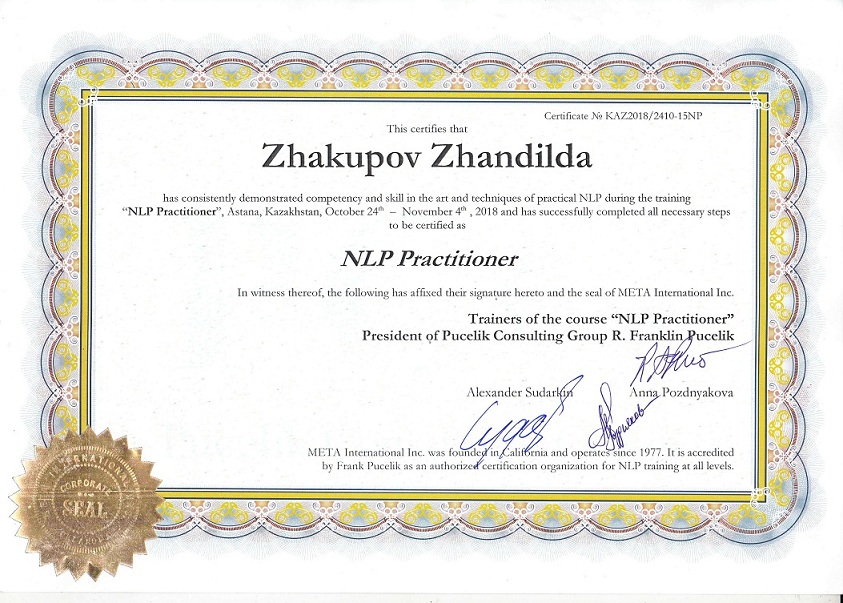 |
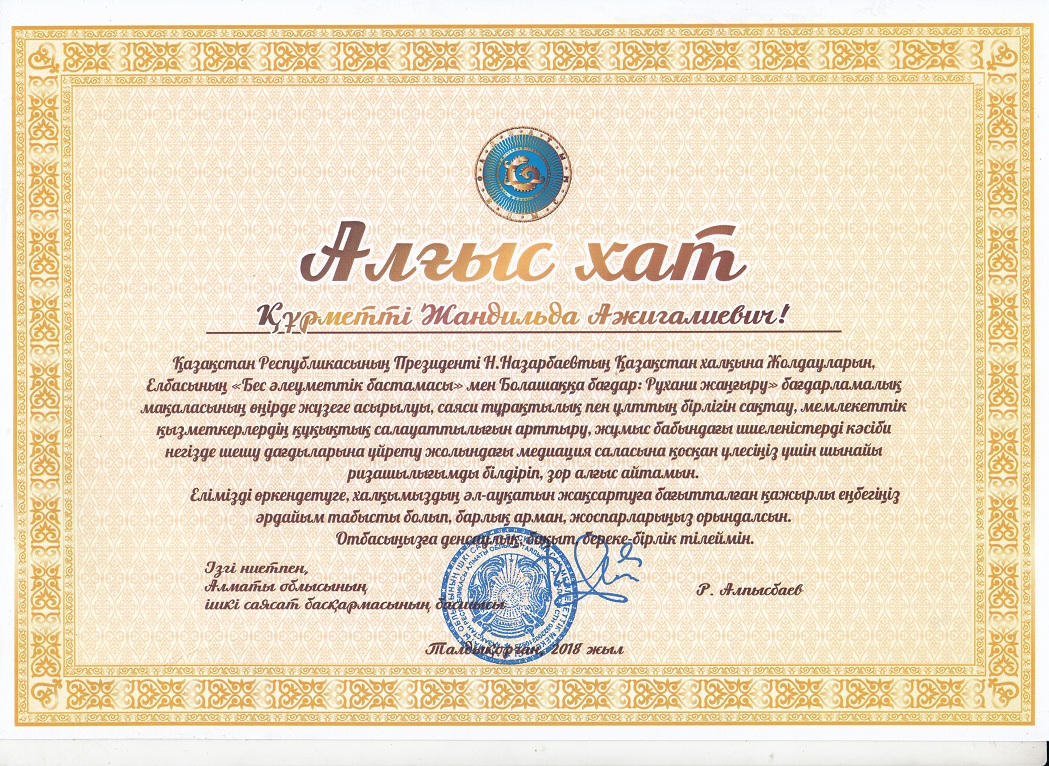 |
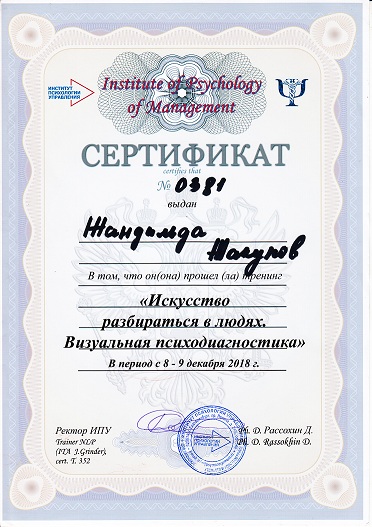 |
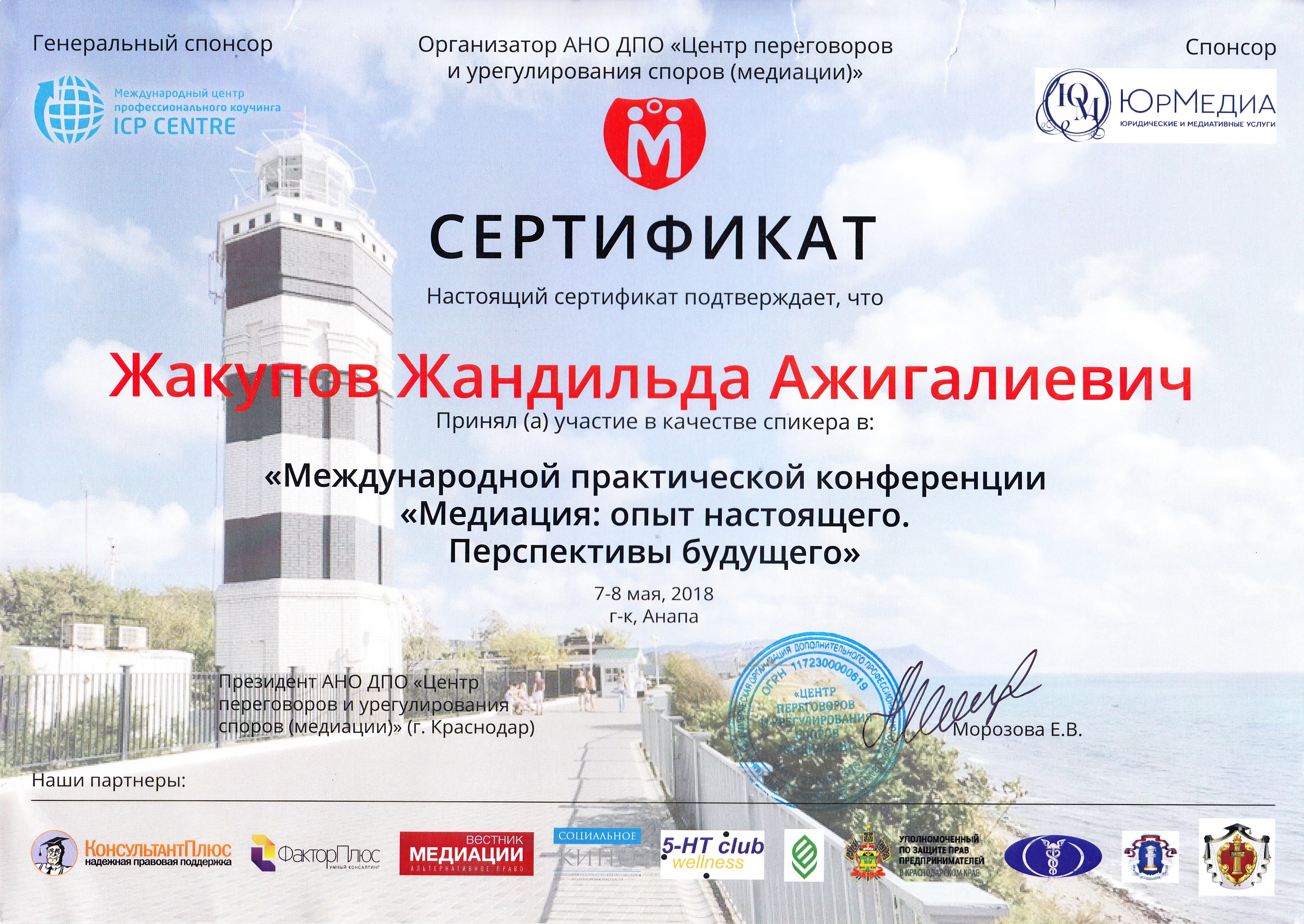 |
 |
 |
 |
 |
 |
 |
 |
 |
 |
 |
 |
 |
 |
|
 |
 |
 |
 |
 |
 |
 |
 |
 |
 |
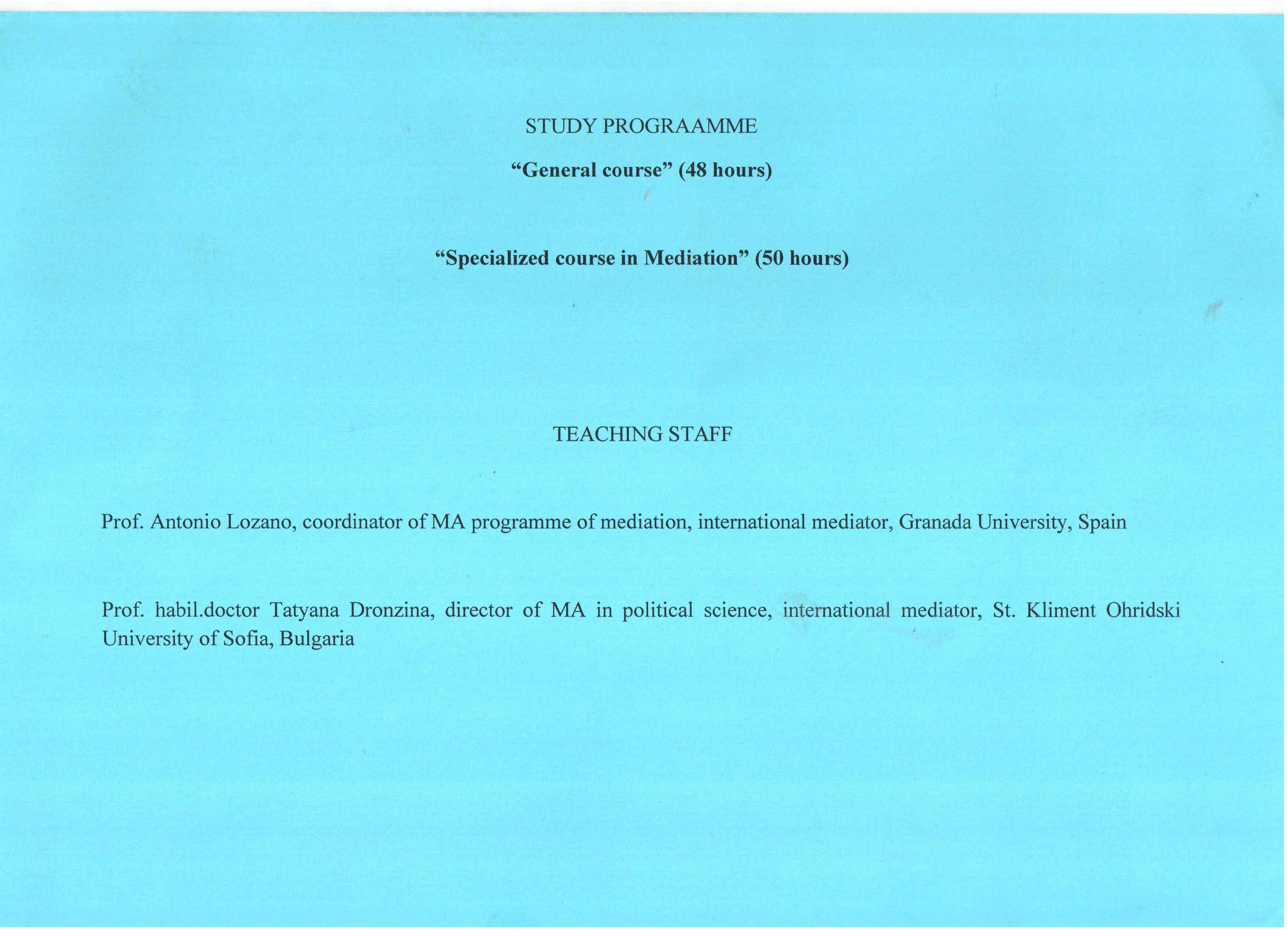 |
 |
 |
 |
 |
 |
 |
 |
 |
 |
 |
 |
 |
 |
 |
 |
 |
 |
 |
 |
 |
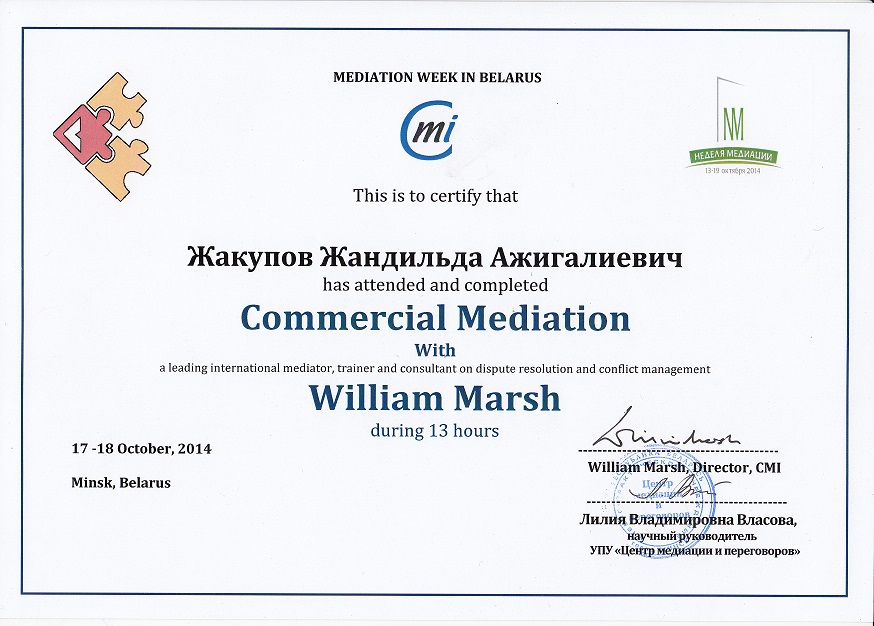 |
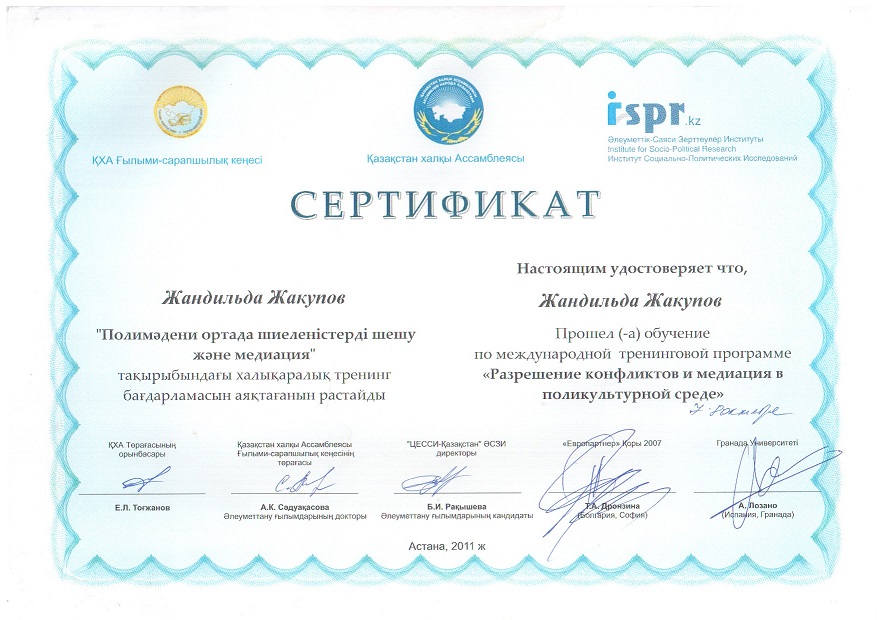 |
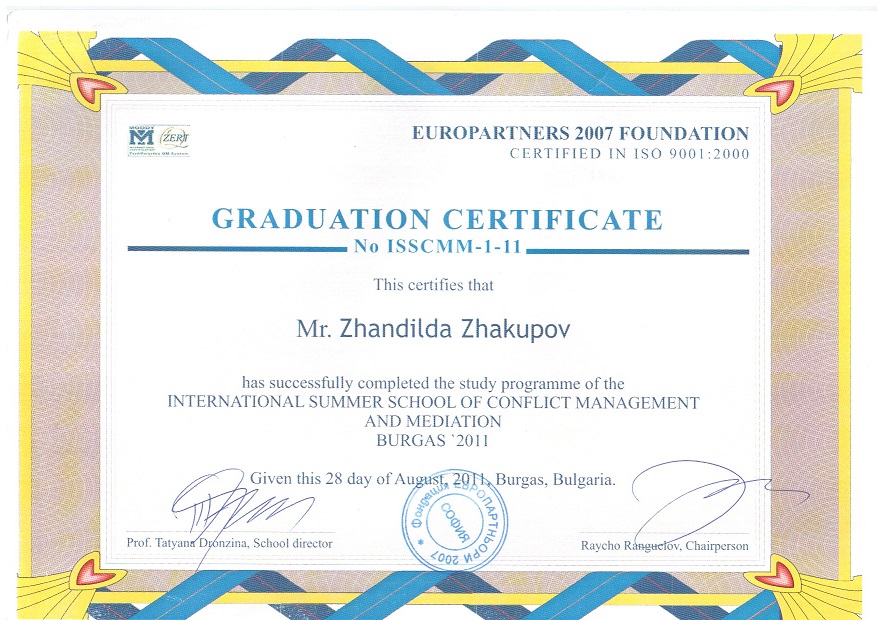 |
 |
 |
 |
 |
 |
 |
 |
 |
 |
 |
 |
 |
 |
 |
 |
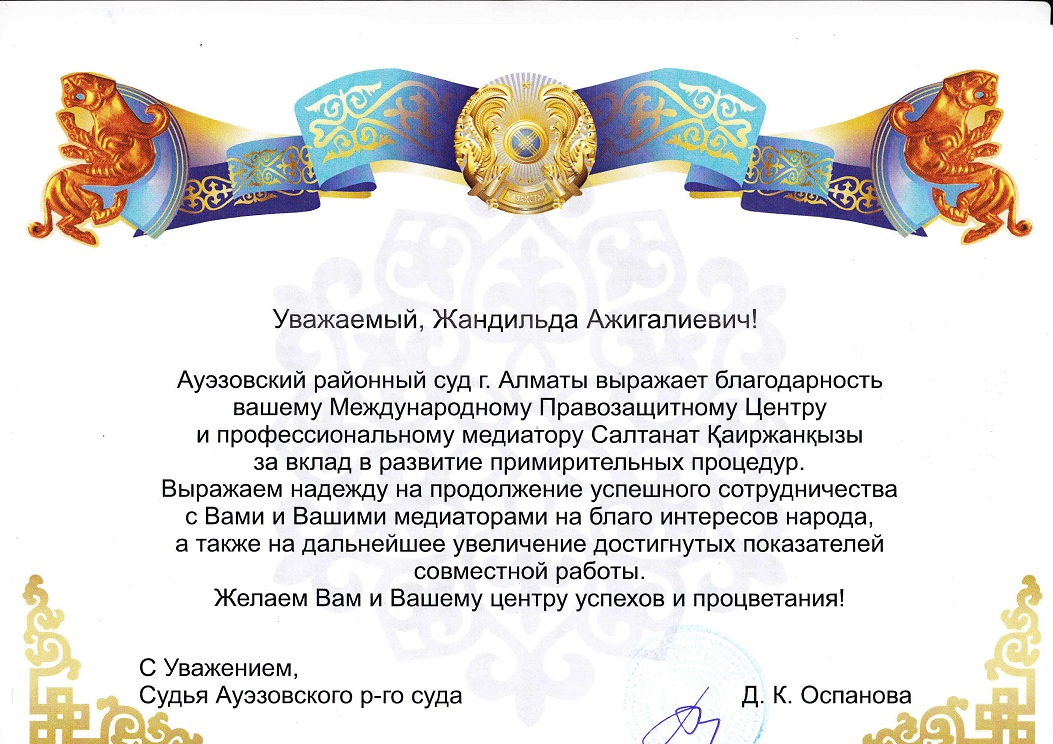 |
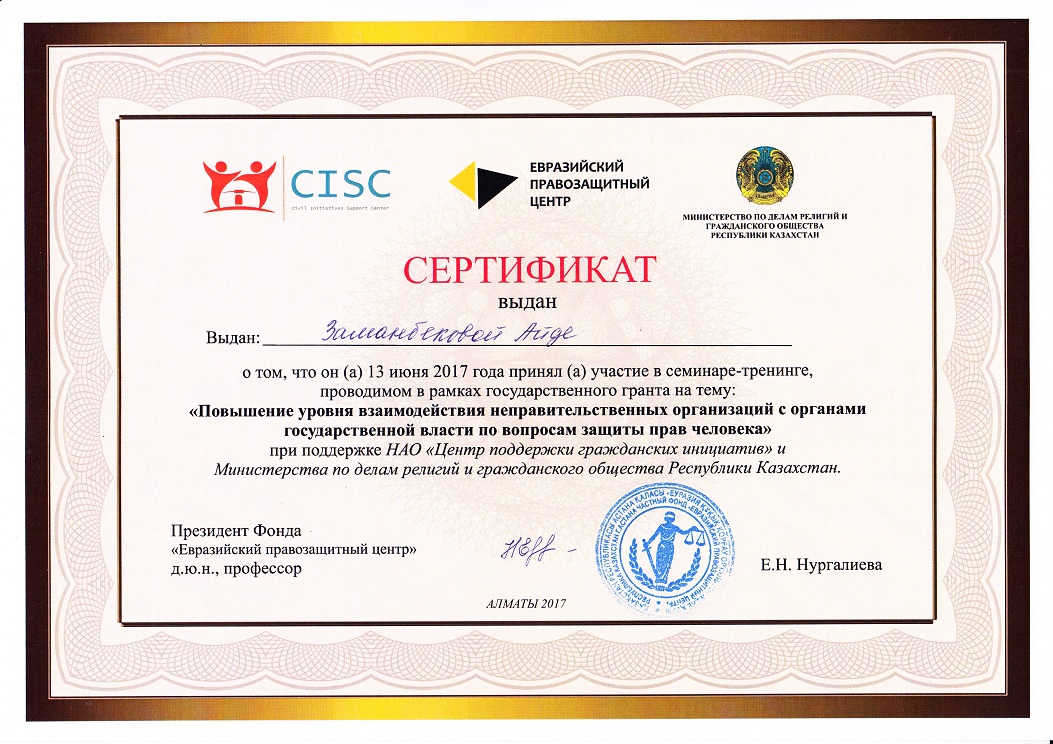 |
 |
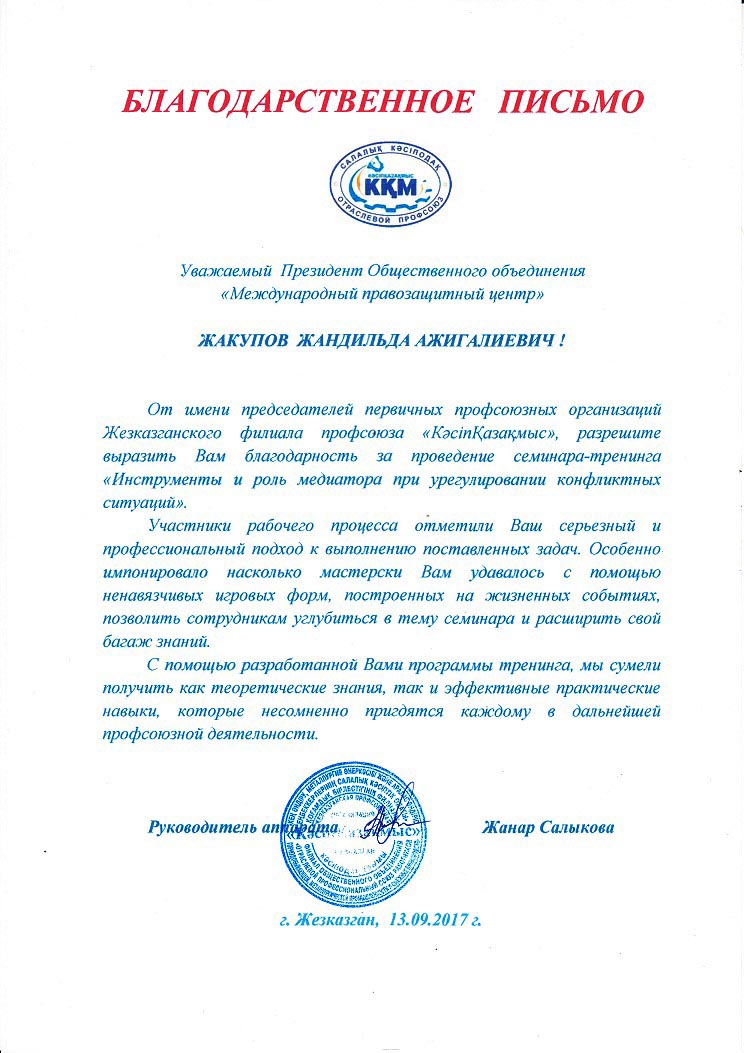 |
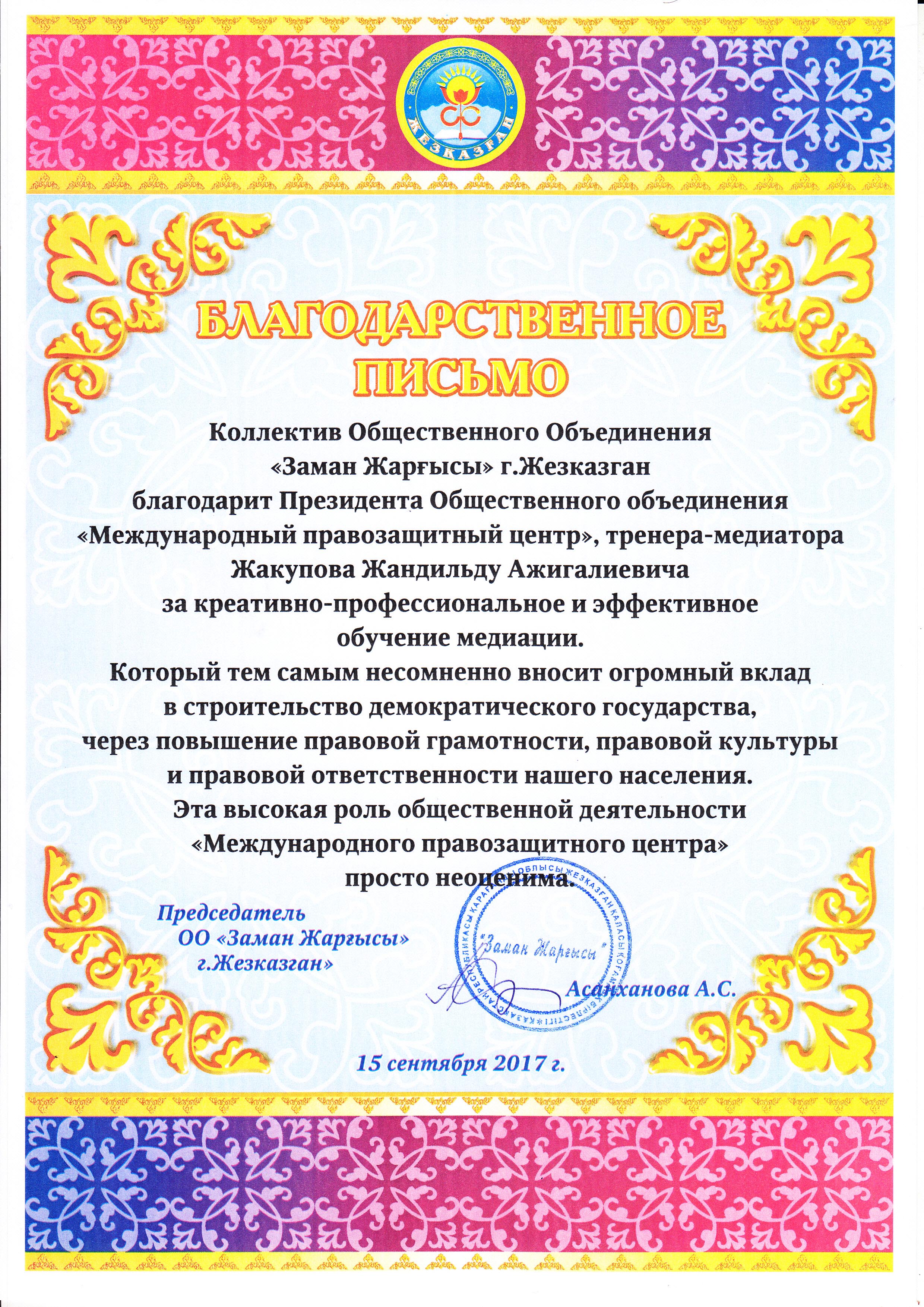 |
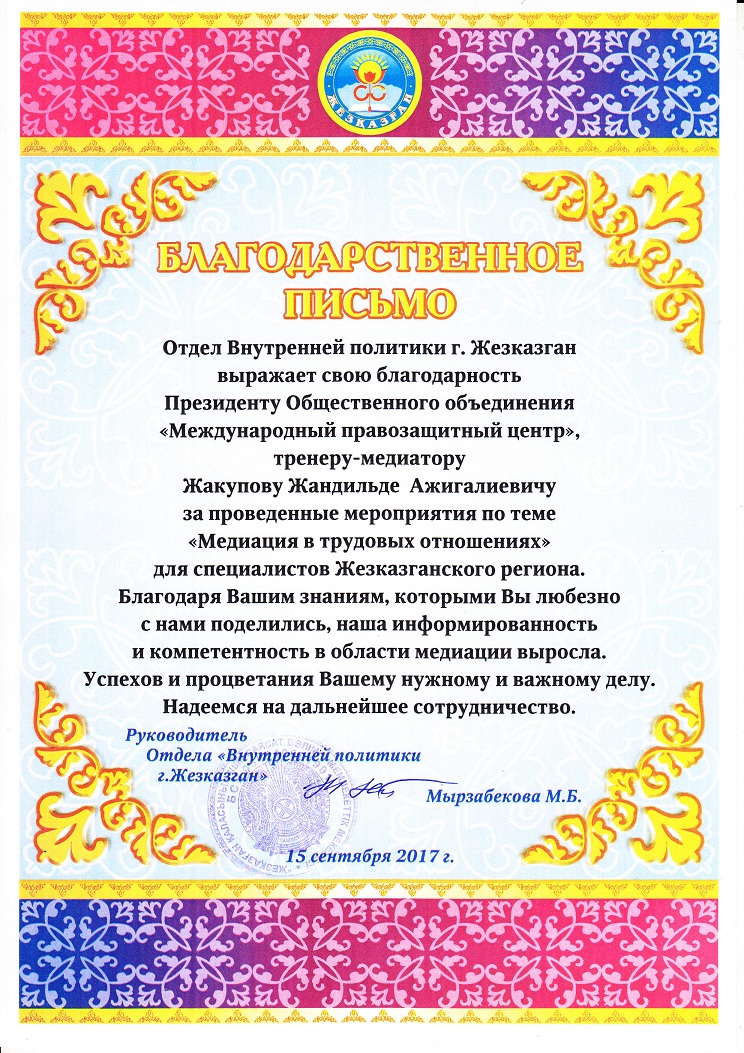 |
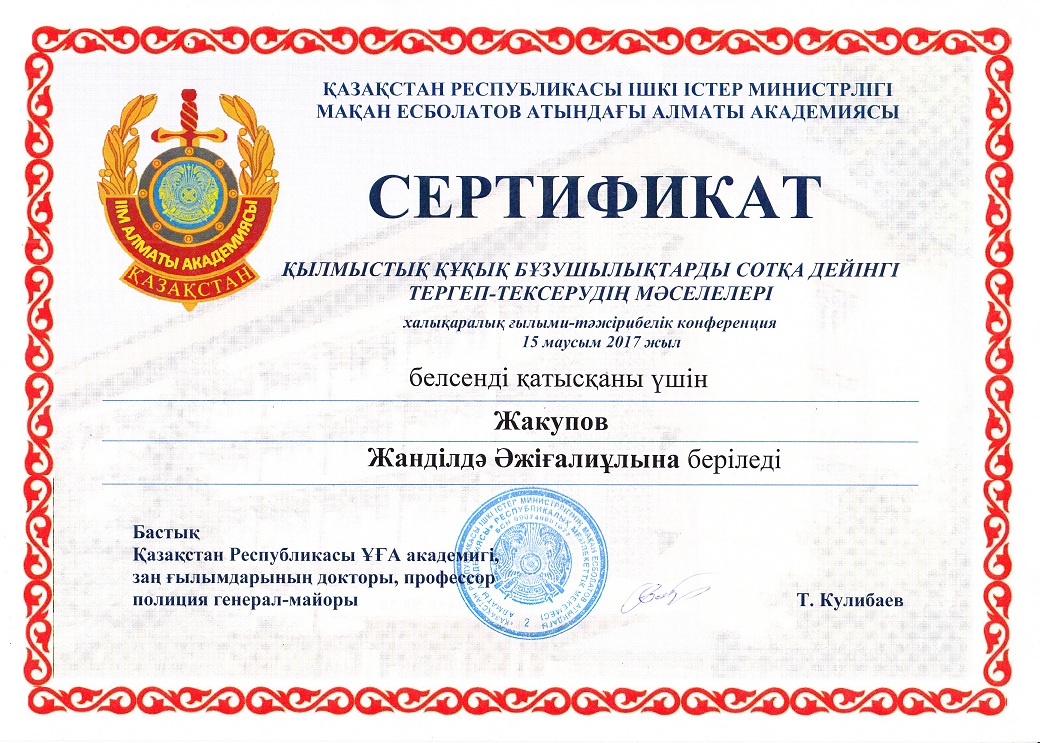 |
 |
 |
 |
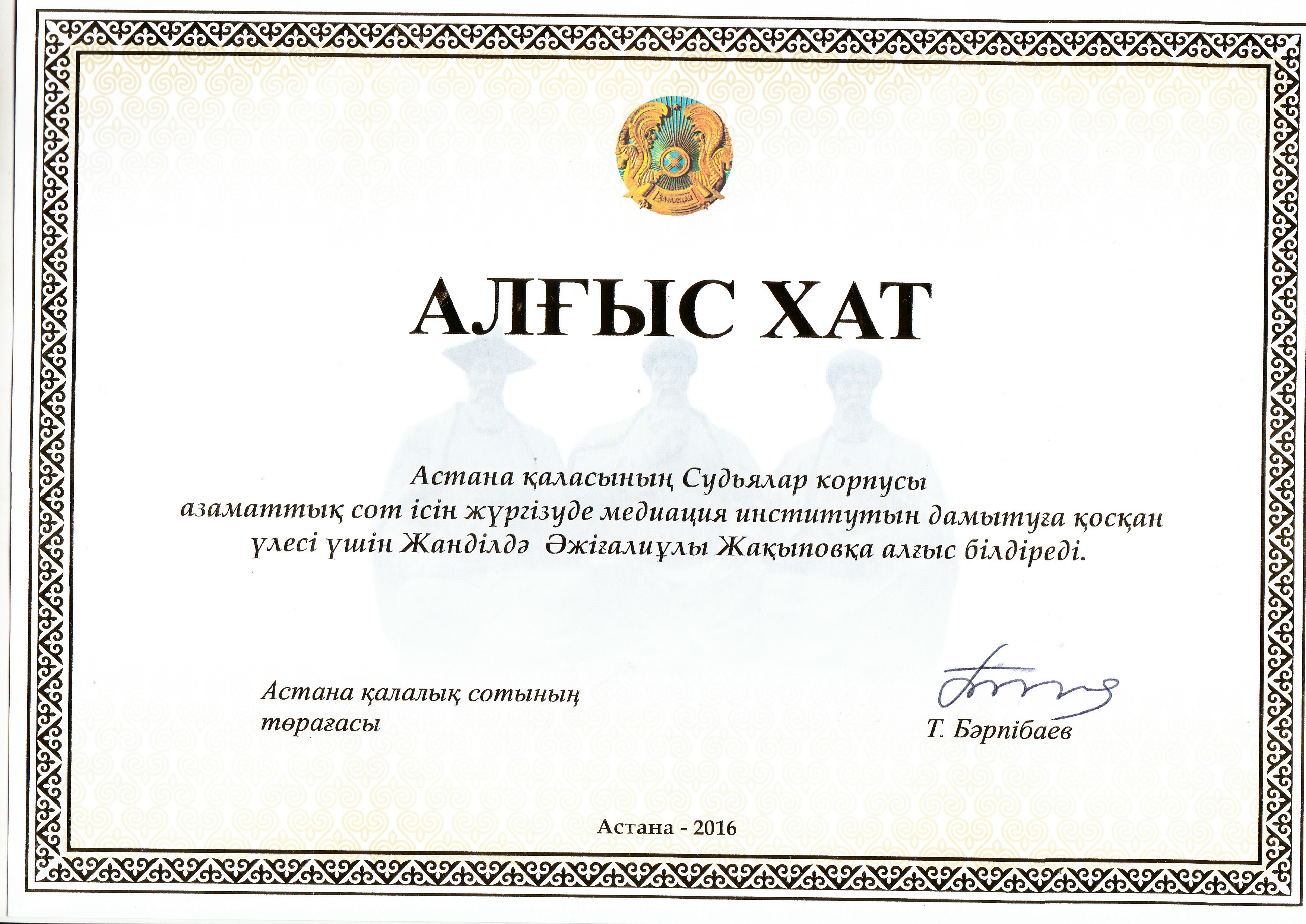 |
Our team
|
Zhakupov Zhandilda Azhigalievich
Президент Общественного объединения "Международный правозащитный центр"
|
Первый Президент Международного правозащитного центра
|
|
Координатор, юрист +7 777 215 74 36 (Whatsapp) |
Уальхан Асель Бекбулатовна
Координатор +7 708 970 51 95 (Whatsapp) |
|
Бухгалтер +7 701 887 51 43 |
Жекебаев Турсын Мухаметкаримович
Менеджер тел. +7 747 320 23 13 (Whatsapp) +7 777 398 86 27 +7 778 200 62 17 электр.почта: zhekebaev.kz@mail.ru |
|
IT-специалист +7 747 844 51 21 (Whatsapp) эл. почта: This email address is being protected from spambots. You need JavaScript enabled to view it. |
Юрист ВАКАНСИЯ |






Trainers training school
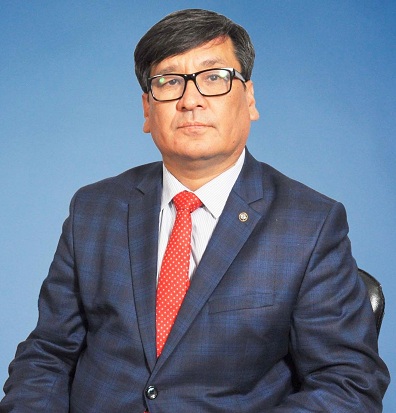 |
Жакупов Жандильда Ажигалиевич
Генеральный директор ОЮЛ «Ассоциация медиаторов Казахстана» Руководитель РОО «Международный правозащитный центр» (МПЦ); Председатель правления ОО «Реформа в уголовно-исправительной системе» Экс посредник Международного Центра по урегулированию споров при Экономическом Суде СНГ (Минск, Беларусь) Академик Международной Академии информатизации Тренер-медиатор, бизнес-тренер (на государственном и русском языках)
|
Schedule of seminars and trainings
To improve the skills and productivity of your employees,
we offer training courses, seminars,
and trainings for 2025 on the following topics:
|
The topic of seminars and trainings
|
Volume (in the academy hours) |
Cost |
|
Fundamentals of labor legislation of the Republic of Kazakhstan and mediation for members of the conciliation commission in resolving labor disputes
|
16 |
50 000 |
|
Practical issues of the application of labor legislation, personnel records management |
16 |
50 000 |
|
Internal Mediation Service
|
50 |
350 000 |
|
Specialized mediation course. Prevention and resolution of social and labor disputes in the company
|
50 |
350 000 |
|
Negotiation and mediation competence. A professional negotiator |
24 |
150 000 |
|
The basics of mediation for corporate lawyers
|
8 |
80 000 |
|
Profiling for mediators, HR and security services |
16 |
80 000 |
|
Leadership and team building |
16
|
50 000 |
|
Anti-corruption compliance |
8 |
50 000 |
|
Project management and risk management |
16 |
60 000 |
|
Office management in the company and nomenclature |
8 |
50 000 |
|
Business communications, etiquette and image |
8 |
50 000 |
|
Emotional intelligence and motivation |
8 |
40 000 |
|
Effective management skills |
16 |
40 000 |
|
Formation of corporate culture |
8 |
40 000 |
|
Conflict management in the organization |
16 |
60 000 |
|
Critical and systems thinking |
8 |
30 000 |
|
Strategy and goal setting in the company |
16 |
40 000 |
|
Public speaking, speech and presentation skills |
8 |
40 000 |
|
Fundamentals of HR Management for managers |
8 |
40 000 |
|
Mentoring |
8 |
40 000 |
|
Stress management |
8 |
30 000 |
|
Fundamentals of management and effective management |
16 |
50 000 |
|
Project management |
16 |
50 000 |
|
Innovation management |
16 |
60 000 |
|
Human resource management |
16 |
50 000 |
|
Fundamentals of risk management |
16 |
50 000 |
|
Problem solving and decision-making process |
16 |
40 000 |
|
Talent Management |
8 |
40 000 |
|
Mentoring and coaching in management |
16 |
60 000 |
|
Change Management |
16 |
50 000 |
|
The basics of lean manufacturing |
16 |
60 000 |
|
Time management |
8 |
50 000 |
|
Flexible Soft Skills to expand competence |
24 |
80 000 |
|
Strategic, operational and project management |
16 |
60 000 |
|
Managing credit, market and operational risks |
16 |
70 000 |
|
Reengineering and process optimization, transformation and efficiency improvement of the company |
16 |
70 000 |
|
Internal audit and financial analysis |
16 |
70 000 |
|
Investments, financial management and controlling |
16 |
80 000 |
|
Corporate governance, internal control, fraud management, business continuity, change management |
24 |
100 000 |
The Center's trainings and seminars are conducted in the state and Russian languages. The trainers are business coaches, conflict analysts, lawyers, mediation coaches, retired judges, etc., who have extensive practical experience working in government agencies, companies in Kazakhstan and abroad. Since 2011, they have conducted more than 600 trainings, lectures and seminars at national and foreign companies, government agencies, banking structures, universities, educational institutions, public organizations, Civil society forums in Kazakhstan, etc.
The training takes place in the format of theoretical and practical classes and is accompanied by all modern teaching techniques and techniques (testing, brainstorming, demonstration of audio and video materials, debriefing, work in small and large groups, etc.) The tuition fee also includes a handout and a certificate. For corporate seminars, there are individual discounts with the departure of the coach to the enterprise in any city.
Detailed information about the activities and training activities offered can be obtained from the manager Zhekebaev Tursyn (tel.87473202313 (PBX ap), 87773988627, 87782006217), electr.Mail: This email address is being protected from spambots. You need JavaScript enabled to view it. , website mpc-info.kz